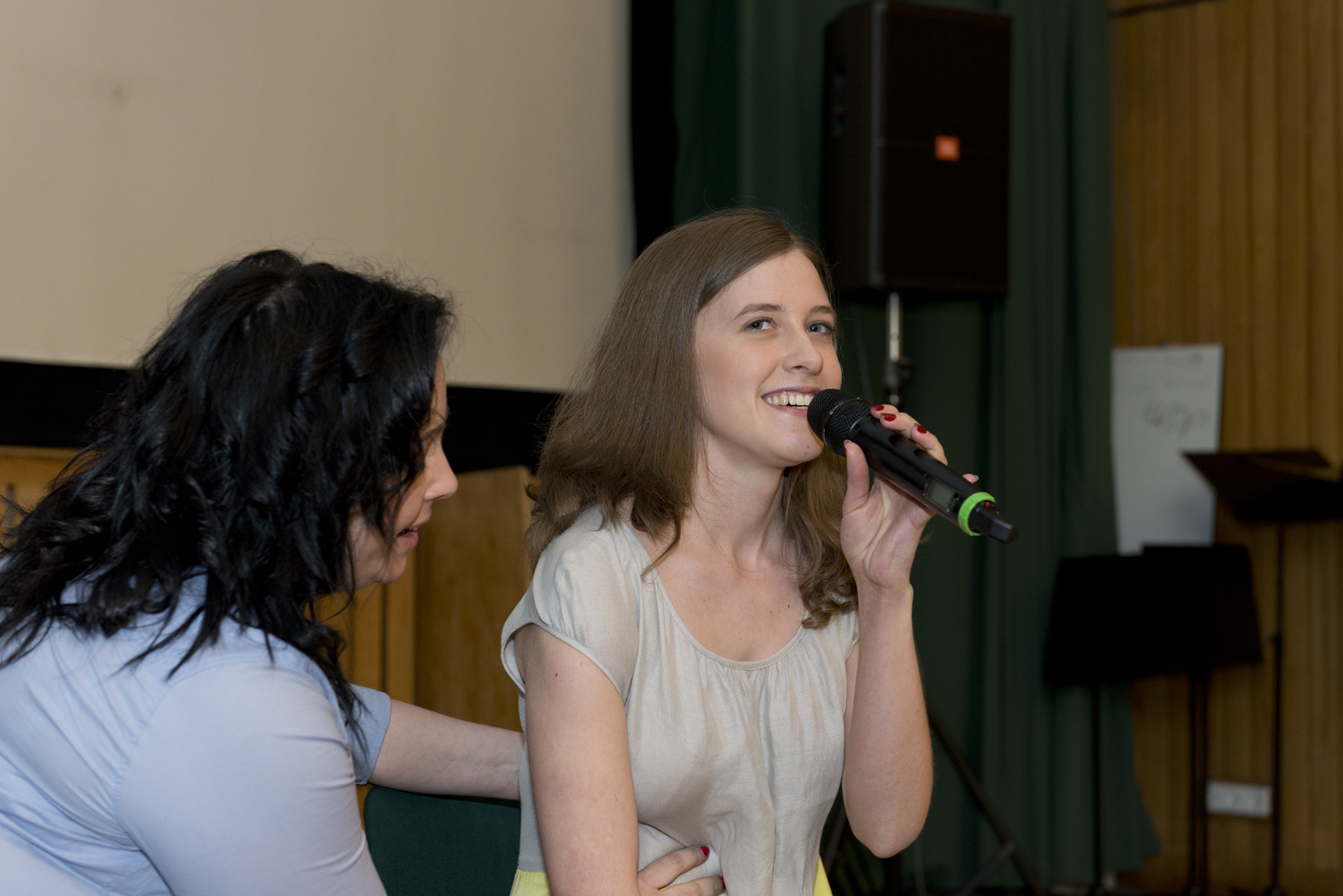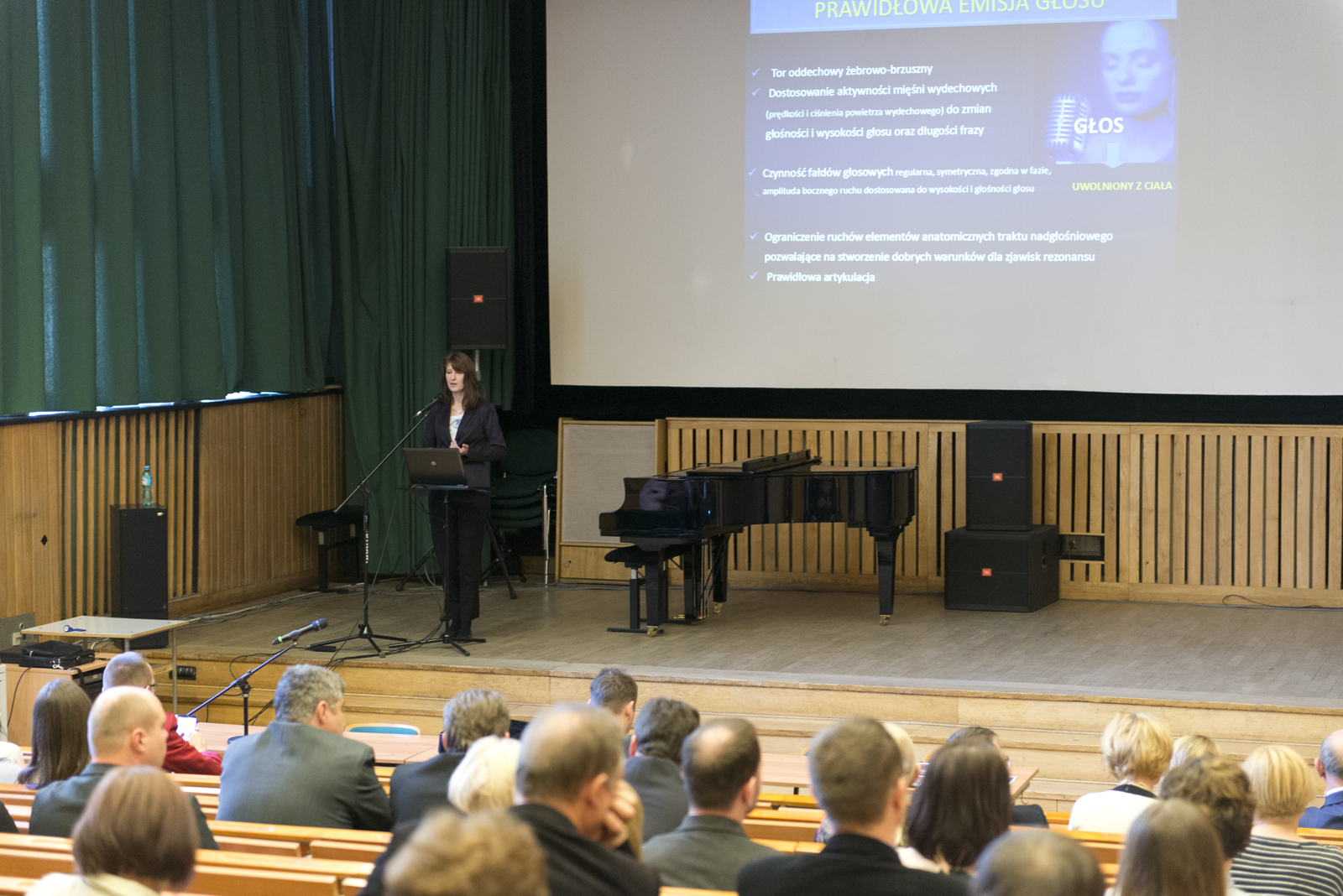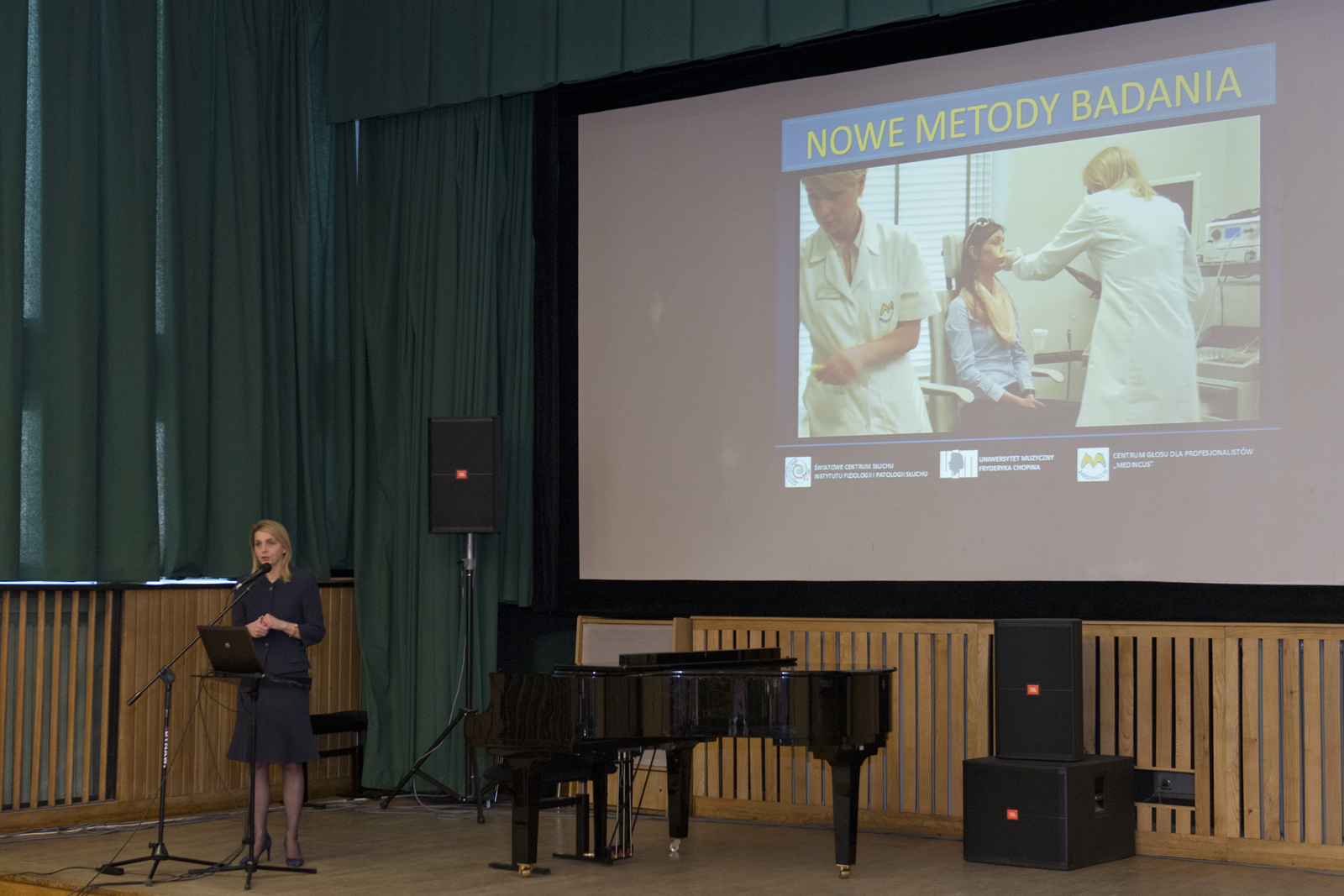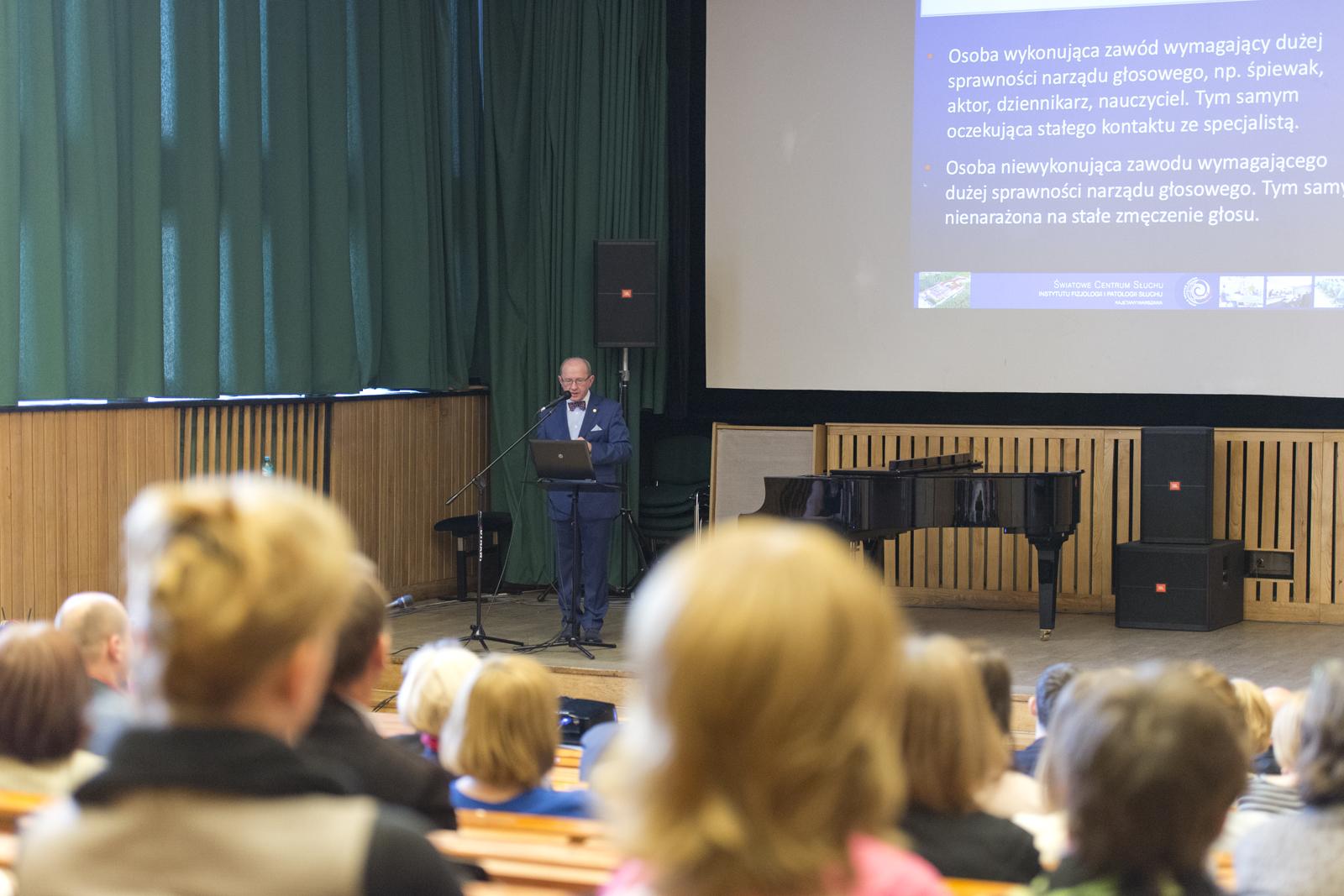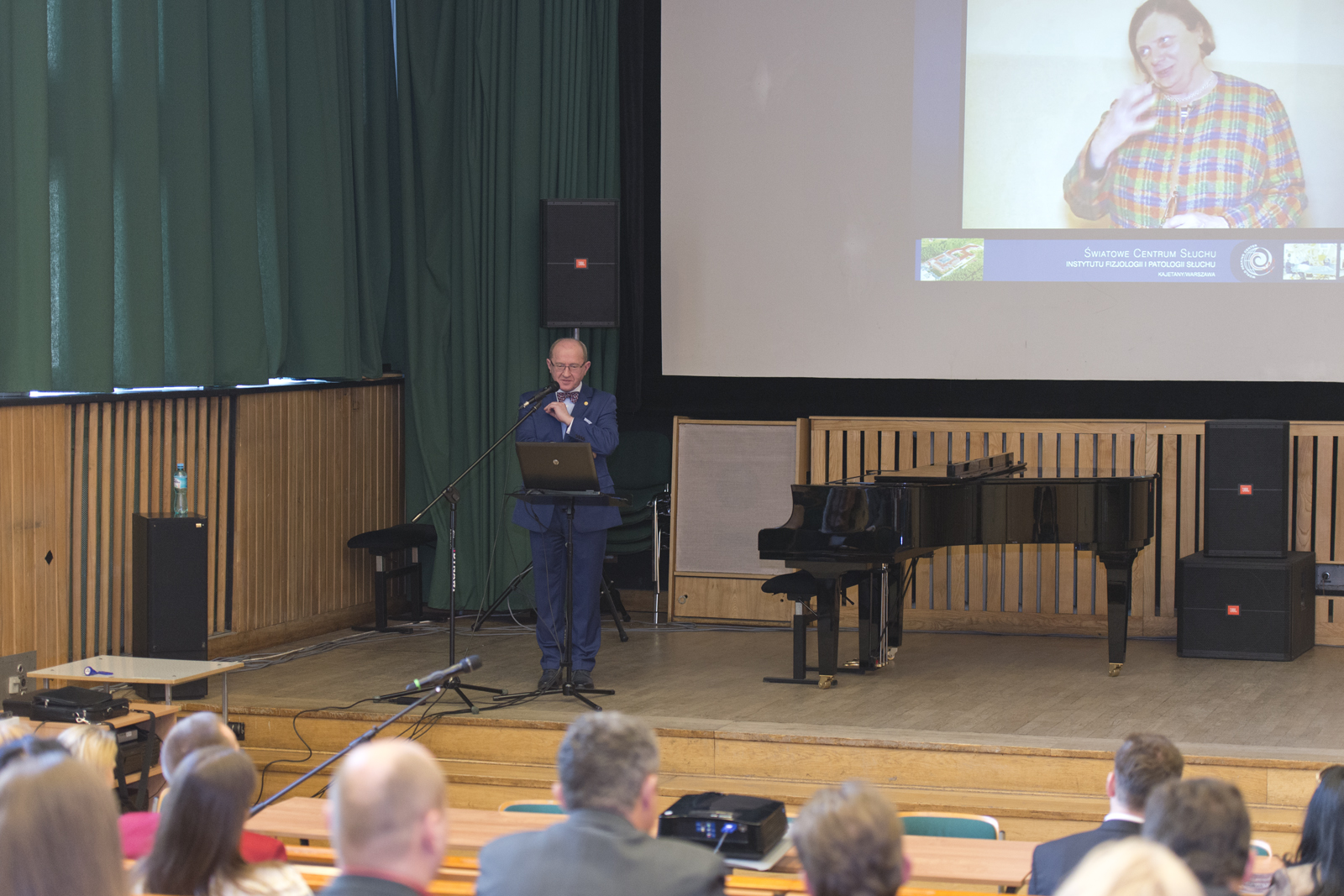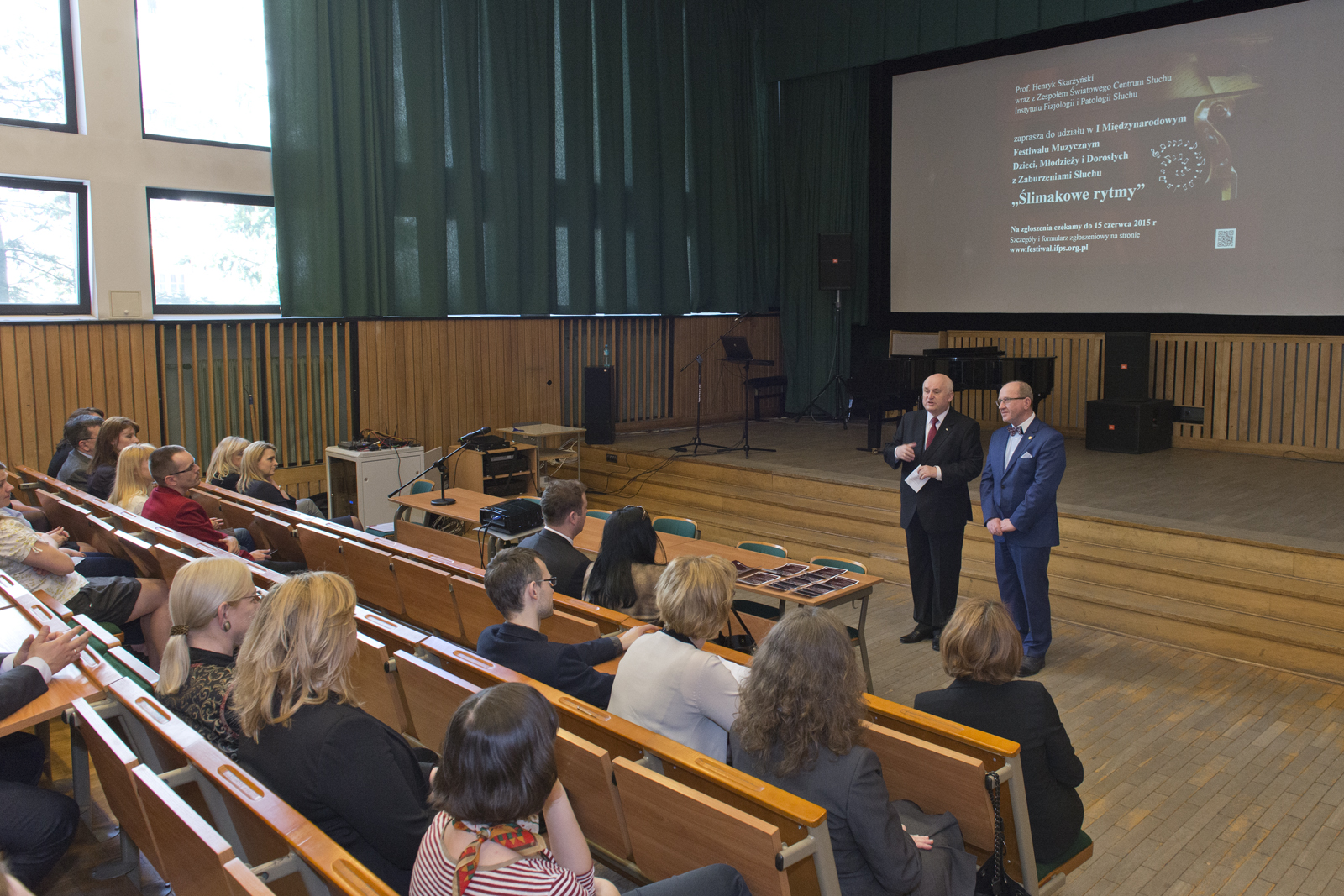



The World Voice Day was celebrated with special lectures on the role of voice in the modern information society and the diagnostics and therapy of voice disorders in professional voice users. The event took place on 16 April 2015 in the Karol Szymanowski Auditorium of the Fryderyk Chopin University of Warsaw (UMFC). On behalf of the Wold Hearing Centre of The Institute of Physiology and Pathology of Hearing, Professor Henryk Skarżyński (the head of the Department of Audiology and Phoniatrics at the UMFC) gave the opening speech. Assoc. prof. Agata Szkiełkowska, the head of the Audiology and Phoniatrics Clinic at the Institute of Physiology and Pathology of Hearing, talked about a modern approach to the diagnostics and therapy for professional voice users.
There are many factors that cause disorders in voice emission and change the sound of voice. The factors include: stress, sedentary lifestyle, outshouting the noise present from the morning to the evening. Very often we talk not being aware of how sounds are emitted from the throat. The organ of speech is an extremely sensitive instrument in the human body. Many people, especially professional voice users, require therapy to help them take appropriate care over their voice and use the voice correctly.
-Currently we have access to many therapies that restore the strain in the area of the vocal tract. It is very important to spread knowledge about that fact and to build confidence and good relations with patients. The results of each therapy are determined by one very important element – hearing control. Without all those factors a therapy won’t be successful – said professor Henryk Skarżyński.
Popular subjects taken up during the World Voice Day concerned the importance of voice in the modern information society, diagnostic methods used in cases of voice disorders in professional voice users and factors cause that problems with voice and speech.
– When we are busy, stressed, when we seat in front of a computer for hours not always caring of our posture, we may have habits that have a bad influence on the processes of voice production – said assoc. prof. Agata Szkiełkowska.
The meeting took place on the World Voice Day, i.e. 16 April 2015, at 10:30 in the Karol Szymanowski Auditorium of the Fryderyk Chopin University of Warsaw, 2 Okólnik Street in Warsaw.